
Tech Unleashed: Racing with the Accelerating Pace of Technology
- cokafor56
- Nov 29, 2023
- 3 min read
Updated: Dec 8, 2023
A critical review on Development and Testing of an Explorative BPM Acceptance Model: Insights from the COVID-19 Pandemic (Ahmad and Van Looy,2021)
Introduction
The introduction effectively sets the context by highlighting the need for an agile mindset in employees working with emerging technologies in Industry 4.0 in Business Process Management (BPM). It introduces the challenges related to changes in technology and processes, emphasizing the difficulty in overcoming impediments when adapting to new work mechanisms. The research question is clearly stated: "How can employees better adopt uncertain work changes by improving their explorative BPM skills?"

Source Future web.jpg
Literature Review
The literature review covers diverse theoretical perspectives like ambidexterity theory and technology acceptance models, providing relevant insights into explorative BPM skills in the context of COVID-19 lockdowns. It incorporates recent research articles such as Sahu (2019) and Grisold (2019) along with seminal works like Venkatesh's TAM. While focusing on technology adoption and top management support. The review embraces varied sources, offering a comprehensive view of factors influencing explorative BPM skills.
Hypothesis Development
Explorative Work Features
The hypothesis development is grounded in ambidexterity theory and TAM, proposing an explorative BPM acceptance model. It focuses on work adaptations during COVID-19, examining features such as work modalities, distractions, and implications.

Explorative BPM skills
The study proposes four explorative BPM skills—feeling creative, opportunistic, flexible, and adaptable to change—derived from the literature. Two hypotheses posit that these skills positively impact perceived usefulness and perceived ease-of-use of explorative work changes.

Extending TAM into an Explorative BPM Acceptance Model (EBAM)
The study utilizes TAM constructs, translating perceived usefulness (PU) into "perceived usefulness of explorative work changes" and perceived ease-of-use (PEOU) into "perceived ease-of-use of explorative work changes." The research model examines the impact of actual explorative work features, explorative BPM skills. Hypotheses are established to test these relationships and mediating roles.

Methodology Review
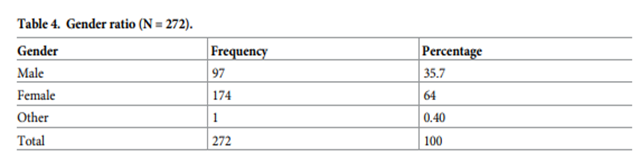
The study uses Structural Equation Modeling (SEM) with partial least squares (PLS) regression to test a model in universities in Europe and Asia. Descriptive statistics, ANOVA-based tests, and non-parametric analyses were conducted to explore demographic differences. The methodology aligns with research objectives, providing a robust quantitative analysis approach.
Descriptive analysis and ANOVA-based tests

Non-parametric analysis.
Results Evaluation
The results are effectively presented, starting with a descriptive text analysis of open-ended survey responses. The structural model assessment includes R2 values, and bootstrapping results other tests. Table 9 clearly summarizes the supported and unsupported hypotheses, while Fig 2 provides a visual representation of the statistical model. The clarity of visuals enhances the overall presentation of results.
Table 9. Bias-corrected and accelerated (BCa) bootstrapping results

Discussion
Statistical evidence is used in MIS research to provide a comprehensive interpretation of changes in BPM skills during COVID-19 lockdowns. This study emphasizes the importance of work modalities and explorative skills, providing practical insights for organizations navigating uncertain environments.
Research Limitations
This study focused on employee attitudes during COVID-19 lockdowns in Western Europe and Asia. Limitations include reliance on attitude evaluations rather than actual work adaptations, the university-based sample, and the need for broader testing across diverse business environments and regions.
My Perception
The paper effectively explores explorative BPM skills in the context of COVID-19, utilizing a robust methodology and theoretical foundation. Well-organized with clear visuals, the study's call to prioritize explorative aspects makes a significant contribution. Writing is clear, and citations are most recent (2019) and IEEE style. The research can consider expanding the sample diversity for future research in other continents like America and Africa.
Conclusion
This research calls upon BPM researchers and practitioners to prioritize the explorative aspects of business processes, recognizing the significance of creativity, flexibility, and top management involvement. Implementing these insights can enhance acceptance and adoption during transformative phases.
References
Ahmad T, Van Looy A (2021) Development and testing of an explorative BPM acceptance model: Insights from the COVID-19 pandemic. PLoS ONE 16(11): e0259226.
Grisold T, Gross S, Ro¨glinger M, Stelzl K, vom Brocke J. Exploring Explorative BPM—Setting the Ground for Future Research. Lecture Notes in Computer Science (including subseries Lecture Notes in Artificial Intelligence and Lecture Notes in Bioinformatics). Springer Verlag; 2019. pp. 23–https://doi.org/10.1007/978-3-030-26619-6%5F4
Sahu P. Closure of Universities Due to Coronavirus Disease 2019 (COVID-19): Impact on Education and Mental Health of Students and Academic Staff. Cureus. 2020; 2019: 4–9. https://doi.org/10.7759/cureus.7541.
Venkatesh V, Morris MG, Davis GB, Davis FD. User acceptance of information technology: Toward a unified view. MIS Quarterly: Management Information Systems. 2003; 27: 425–478. https://doi.org/10.2307/30036540


Comments